Some companies just seem to stop chasing backlinks.
Yet their mentions keep growing. Their research gets cited. Journalists already know their name before the outreach email goes out. Publishers keep coming back on their own.
From the outside, it looks like luck. It isn't. They're riding a flywheel.
Most people treat link building like a straight line: get link, repeat. It works. It's also exhausting. Here's the section that shows why.
Most Link Building Is Linear (And That's the Problem)
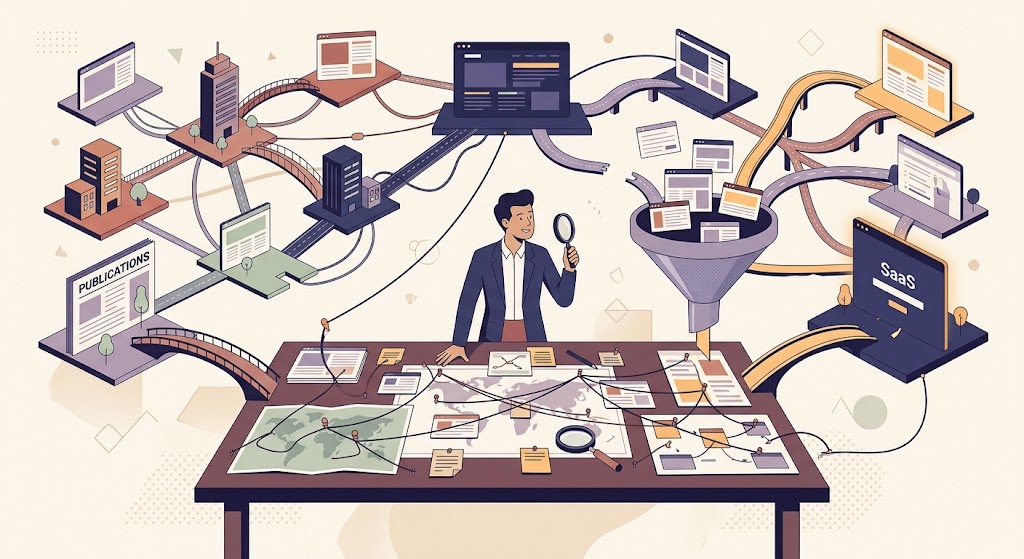
Here's the shape most campaigns actually run on:
Find a prospect. Pitch it. Land the link. Report it. Start over from nothing next month.
Nothing here carries forward. Every campaign is its own island. The relationships you built last quarter don't make this quarter easier, because you never treated them like something to build on in the first place. You just treated them like a box to check.
This isn't a bad model, exactly. It works, in the sense that it produces links. It's just flat. Effort in, links out, at roughly the same ratio, forever, no matter how long you've been doing it.
The Link Building Flywheel
Now picture the same effort, but structured so it compounds instead of resetting.
One quality placement doesn't just do the one job it was pitched for. It sets off a chain of second-order effects: more people see the work, some of those people cite it without being asked, those citations put the work in front of even more people, and the whole thing starts spinning faster on its own. This isn't a metaphor borrowed from business books for no reason. It's a genuinely accurate description of how a small number of brands seem to keep earning links without running nonstop outreach.
Here's the part that actually explains the acceleration, not just the shape of it. Every successful cycle leaves something behind. A few more publishers now recognize the name. A few more writers have already seen the previous work and don't need it re-explained. A few more editors already trust that this company's pitches are worth opening. Somewhere, someone bookmarked the research and will pull it up again the next time the topic comes up. None of that disappears when the campaign wraps and the report gets sent. It just sits there, quietly, waiting for the next cycle to inherit it. That's the actual mechanism behind the compounding, not luck, not magic, just residue from the last cycle that never got cleared away.
One Link, Multiple Assets
It helps to see this laid out as more than a single arrow pointing to a single result.
Notice what's actually stacking up on the left side of that chain before you ever get to "more links" again: visibility, recognition, and trust are all separate assets, sitting there on their own, independent of whatever the next link count ends up being. A single placement was never just a single backlink. It was the seed for all of it.
The Five Parts of the Flywheel
1. Great asset.
Original research, a named framework, a genuinely useful tool, a dataset nobody else has, an expert take sharper than what's already published. Something worth citing, not just something worth reading once. This is the part nobody gets to skip.
2. First placement.
The hardest link in the whole cycle. This one almost always takes real outreach, because nobody's heard of the asset yet and nothing's pulling them toward it on its own.
3. Visibility.
People start discovering the asset without you pushing it in front of them directly. Journalists researching the topic. Other bloggers looking for something to reference. Researchers who stumble on it while looking for a source. Customers who find it through someone else's content instead of yours.
4. Secondary citations.
Nobody pitched these. That's the whole point. People found the asset on their own, decided it was worth referencing, and linked to it without an email ever landing in their inbox.
5. Authority.
By now, publishers already recognize the name. The next outreach campaign doesn't start cold, it starts warm, because the last cycle already did some of the convincing for you.
Then it repeats, and here's the part worth sitting with: each cycle should get a little easier than the one before it, assuming the flywheel is actually working the way it's supposed to. That's the entire difference between this and the linear model. Linear campaigns cost roughly the same amount of effort every single time. A flywheel campaign, done right, tends to get cheaper to spin as it goes.
Why Some Content Becomes a Citation Magnet
"Create good content" is true and also almost useless as advice, because it doesn't explain why some genuinely good content still never gets cited by anyone.
The actual answer is more specific. People cite things that give them something they can't easily get anywhere else: originality, a named framework they can reference by name instead of re-explaining from scratch, real statistics, actual research instead of a rehash of the top ten search results, visual data that's easy to pull into someone else's article, proprietary information nobody else has published, a genuinely fresh opinion, an industry benchmark people keep needing to cite, or a tool that's just useful enough that people want to point their audience toward it.
The pattern behind all of it: citation magnets solve a problem for the person citing them. They make the citing writer's job easier, whether that's backing up a claim, saving them from running their own research, or giving their readers something concrete to look at. Nobody cites something purely because it's well written. Linkable assets work because of what they let someone else skip doing.
Content built around original research and real data earns meaningfully more backlinks than opinion-based content, roughly 4.3 times more according to recent link building research (Ranktracker, 2025). Studies that publish genuinely unique datasets average significantly more referring domains than standard articles covering the same ground, according to the same analysis. That's the mechanism this article is describing, showing up as a number.
Rankings Aren't the End Goal, They're Fuel
Here's a loop worth noticing:
Rankings feel like the finish line, because they're the thing most reports lead with. They're really more like fuel for the next lap. A higher-ranking page gets discovered by more people, and more discovery is exactly what feeds every other part of the flywheel: more mentions, more citations, more links, which then push rankings up again. Treating rankings as the destination misses that they're actually one of the inputs that keeps the whole system spinning.
So Where Does Digital PR Come In?
Digital PR isn't magic, whatever the case studies sometimes imply. What it actually does is provide the first push, the initial burst of visibility that gets an asset in front of enough people for the rest of the flywheel to start turning on its own.
Visibility starts citations. Citations build authority. Authority builds momentum. Digital PR for SEO is really just the ignition system for a flywheel that then has to keep spinning without that same level of manual push behind it. Digital PR has become the most commonly cited tactic among SEO professionals for exactly this reason, it tends to produce the kind of initial visibility that other tactics struggle to generate cold (Ranktracker, 2025).
Research from Muck Rack analyzing over a million AI citations found the large majority, around 82 percent, came from earned media rather than content brands published about themselves (Authority Tech, 2025-2026). A separate analysis of tens of thousands of brands found that unlinked brand mentions correlated more strongly with AI Overview visibility than backlinks did. The flywheel mechanism appears to be increasingly relevant to how generative search surfaces sources too, which is one more reason a citation magnet is worth more than a single well-placed link.
Why Most Flywheels Never Start
Most flywheels don't fail because of one dramatic mistake. They fail because the mechanism breaks at the very first link in the chain, and everything downstream just quietly never happens.
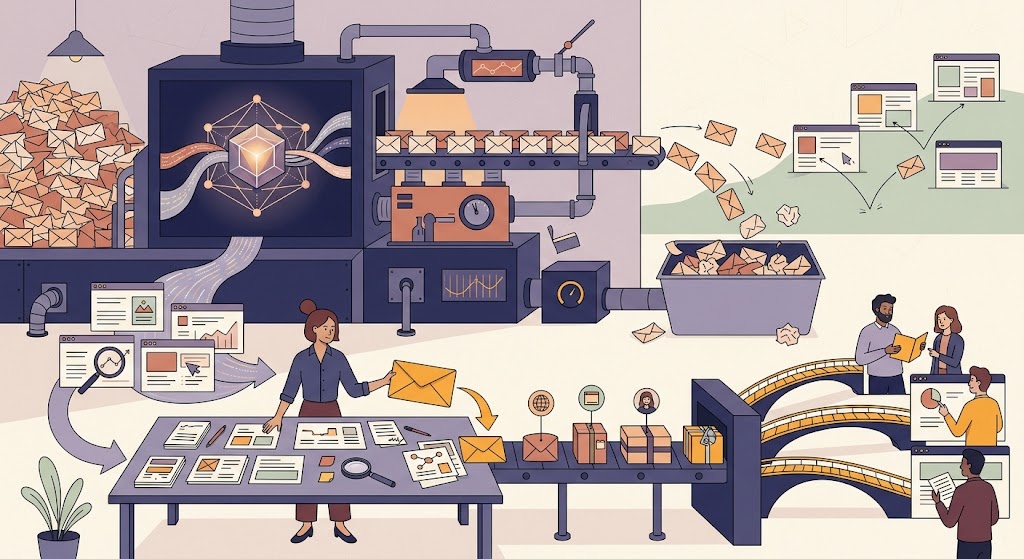
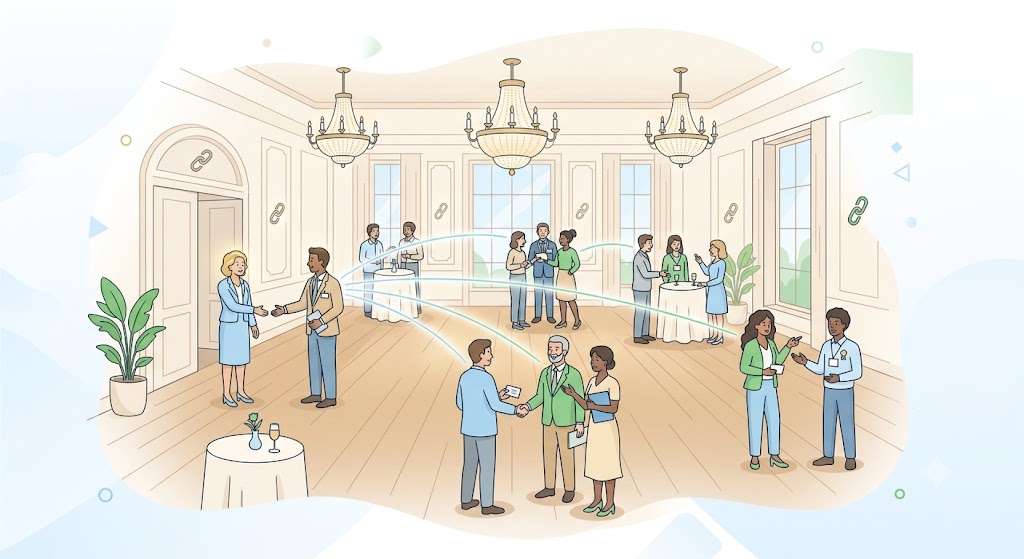
Publish a listicle instead of something original, and there's nothing there for anyone to cite, so nothing gets picked up beyond the placement you paid for in outreach. Run one-off campaigns with no follow-through, and there's no asset left standing long enough to attract a second look. Skip the publisher relationships and treat every ask as a cold one, and each campaign has to rebuild trust from nothing instead of drawing on anything left over from before.
The wheel doesn't stall because a team didn't work hard enough. It stalls because nothing was ever built that could keep spinning without a hand on it.
How to Build Your Own Flywheel
Step 1: Create something worth citing.
Not content designed to earn one link and disappear, content designed for secondary citation instead. This is the part that can't be skipped or faked with volume.
Step 2: Launch it strategically.
Target the publications and people who actually cover this topic, not a generic list of anyone with a contact form.
Step 3: Get the first authoritative placements.
This is the hardest, most manual part of the whole cycle, and it's supposed to be. You're building the initial push, not coasting yet.
Step 4: Keep promoting it.
Don't publish and disappear. Visibility compounds when you keep giving people reasons to notice the asset, not just on launch week.
Step 5: Refresh the asset.
Update the data, expand the research, keep it current enough that it's still worth citing a year from now instead of feeling dated within a quarter.
Step 6: Repeat.
Except it's not really a repeat. Each cycle should start from a warmer position than the last one, because relationships, recognition, and citations from the previous round are still working in the background.
That last point is really the entire idea of this article compressed into one line: each cycle should tend to be easier than the one before it, if the flywheel is working correctly. If it isn't, something's still running linear underneath the surface.
What People Think vs. What's Actually True
People tend to assume successful brands just build more backlinks than everyone else. Usually, that's not it. Usually, they build one thing that keeps creating backlinks on its own, long after the original outreach campaign wrapped up.
The goal was never collecting links one at a time forever. It's creating a system that keeps generating them after you've stopped actively pushing. That's the entire difference between a traditional link building strategy and a flywheel, and it's the difference between a campaign that gets harder every quarter and one that gets easier.
Frequently Asked Questions
What is a link building flywheel?
A self-reinforcing system where one strong placement creates visibility, that visibility produces citations nobody had to pitch for, and those citations make the next placement easier to earn. It compounds instead of resetting the way a standard outreach campaign does.
How do backlinks actually compound?
Through visibility feeding citations feeding more visibility. A well-placed link exposes an asset to new people, some of those people cite it on their own, and each new citation puts it in front of an even wider audience, which keeps the loop turning without fresh outreach behind every single link.
Why do some pages naturally keep attracting links?
Because they were built to be cited, not just to rank. Original research, named frameworks, real data, and genuinely useful tools give other writers a reason to reference them without being asked. It comes down to solving a problem for whoever's doing the citing, a pattern covered in more depth in our article on why some pages attract links naturally.
What actually makes content a citation magnet?
Originality that can't be found elsewhere, a name attached to the framework or idea, real statistics instead of recycled ones, and a format other people can easily point their own audience toward. Content that gives the citing writer something they'd otherwise have to produce themselves gets cited far more often than content that's simply well written.
Is passive link earning the same thing as a flywheel?
Related, but not identical. [Passive link earning] describes what happens when links show up without direct outreach. The flywheel is the mechanism that causes that to happen in the first place, the engine running underneath the passive results.
How long does it take to build a flywheel?
Longer than a single campaign, and that's normal. The first placement is always the hardest and slowest part. Visibility and secondary citations tend to build over months, not days, but once they start compounding, each new cycle takes noticeably less effort than the one before it.
Can small businesses actually build one of these?
Yes, and often more easily than larger brands, because a small business only needs one genuinely original asset in a specific niche to start the cycle. Flywheels don't require massive budgets, they require something worth citing and the patience to let visibility compound instead of chasing a link count every month.
Do rankings help generate more backlinks?
Yes, because rankings drive discovery, and discovery is what feeds every other part of the loop. Higher visibility in search puts an asset in front of more people who might reference it, which is part of why rankings function more like fuel for the flywheel than a finish line on their own.
What role does digital PR play in the flywheel?
It usually provides the first push, the initial visibility that gets an asset seen widely enough for the rest of the cycle to start turning without ongoing manual outreach behind it. It's the ignition, not the engine.
Can old content become part of a flywheel?
Absolutely, if it's refreshed rather than left to go stale. Updating the data, expanding the research, and keeping an older asset current can restart a cycle that had slowed down, especially if the original placement still has some residual authority behind it.
The Takeaway
The best link builders eventually stop thinking in campaigns and start thinking in systems. A campaign ends the day the report goes out. A system doesn't know the report went out, it just keeps turning, quietly generating the next opportunity while everyone's attention has already moved on to something else. That's the entire difference this article has been circling the whole time.
Most link building advice is about the next link. We're more interested in building the thing that keeps generating links long after you've stopped chasing them. If your campaigns feel like they're getting harder instead of easier, that's usually the tell. Book a call with LinkyJuice and let's figure out where your flywheel is stuck.
About the Author
Davit Nazaretyan writes about link building, backlink audits, and SEO automation at LinkyJuice. His work focuses on separating what actually moves rankings from what just looks like it does: from cleaning up toxic backlink profiles to building outreach systems that hold up against algorithm updates. Connect on LinkedIn.