What Is a Linkable Asset
A linkable asset is content created specifically because other websites have a concrete reason to cite it, not because it's helpful or well-written.
That distinction matters. Most content is written to answer a search query. A linkable asset is written to become a reference point, something a journalist, blogger, or fellow SEO can point to instead of writing the explanation themselves.That is one reason linkable assets fit naturally into a broader link building strategy.
Ahrefs frames the same idea as content deliberately crafted to attract links, built around formats like original research, tools, and visual data.
One linkable asset can also live inside a normal article rather than being the whole page. A single original statistic, one clear chart, or one well-defined framework can do the work of an entire dedicated resource. It's worth asking, for any page you're building, whether there's one specific element inside it that gives someone a reason to point to that exact spot.
What Actually Earns Links (and What Doesn't)
Not every format earns links equally, and length has nothing to do with it. A 5,000-word guide can earn zero links. A single calculator can earn hundreds.
These aren't automatically linkable just because they're technically one of these formats. A generic infographic, a rewritten industry statistic, or a "10 tips" post dressed up as a study won't earn links just by claiming the format. The underlying content still has to be genuinely original or useful.
How Many Backlinks Is Realistic
Most content earns nothing, and that's the honest starting point. A Backlinko and BuzzSumo analysis of 912 million blog posts found that 94% of all blog content earns zero external backlinks, and only 2.2% earns links from more than one site. That's the baseline every piece of content is competing against.
A genuine linkable asset changes those odds substantially, but the range is wide and depends entirely on execution:
One more distinction worth knowing: referring domains matter more than raw backlink count. Twenty links from twenty different sites is a stronger signal than a hundred links from five sites, since each independent domain represents a separate decision to cite you. Our guide on referring domains vs. backlinks covers why that distinction changes how you should actually measure success here.
Choosing a Topic With Real Citation Demand
Search volume matters less than most people assume for this specific goal. One documented approach targets keywords with as little as 100+ monthly searches and low keyword difficulty, the logic being that a small, underserved topic with real citation demand outperforms a competitive one where a dozen better-resourced sites already own the space.
Relevance to your niche still matters more than volume. A topic loosely connected to your industry earns weaker, less useful links even if it happens to attract a few.
Building the Asset Itself
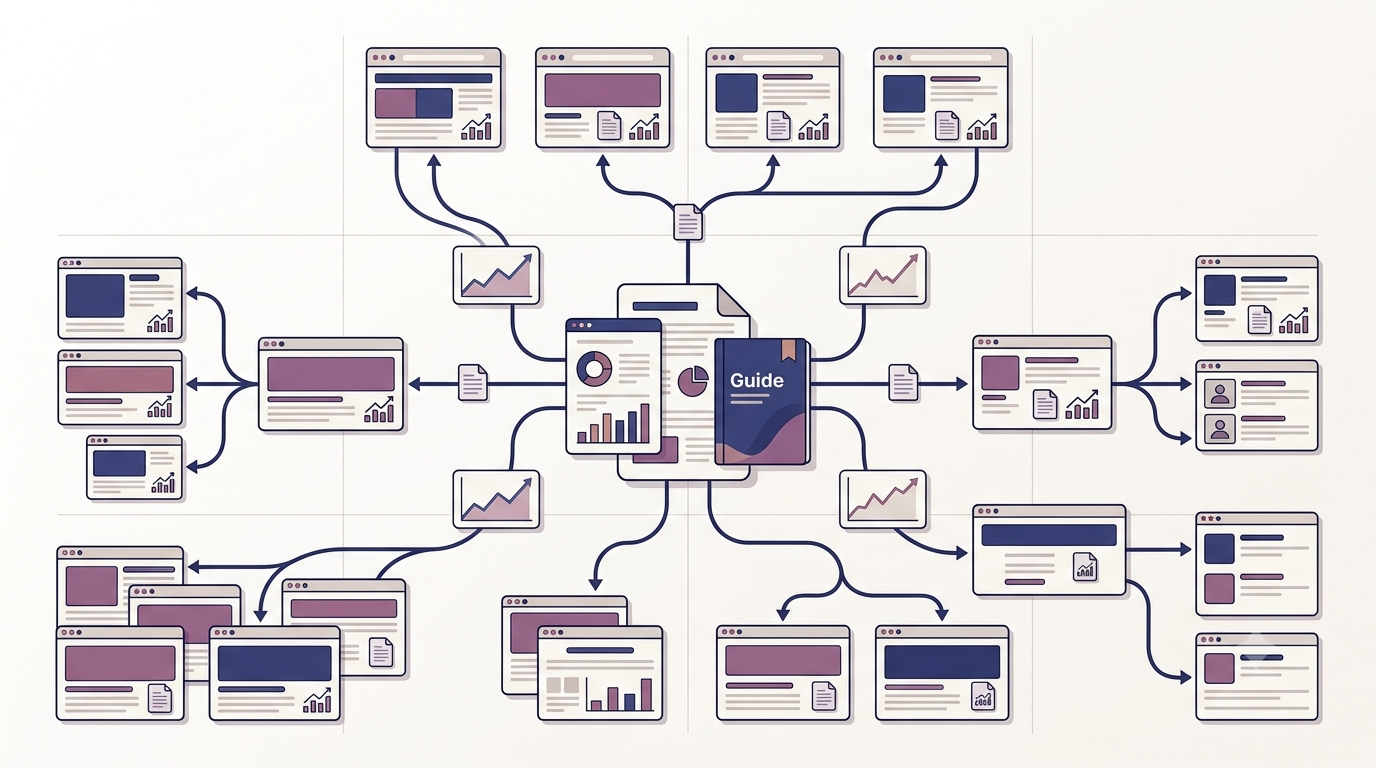
The format is what turns an idea into something citable. Data-heavy findings work best as research studies. Comparisons work best as rankings or benchmarks. Repetitive manual tasks work best as tools or calculators. Process-heavy topics work best as guides. The right link building tools can also help you research, build, and promote these assets more efficiently.
Design for reference-ability specifically. Label data clearly enough that someone could quote it directly. Break up dense sections with visual summaries. Keep explanations simple even when the underlying topic is complex, if a writer has to work to understand your point, they'll cite something easier instead.
Designing for AI Citation, Not Just Human Readers
The same principles that make an asset link-worthy to a human writer make it extractable to an AI system, with a few additions worth building in deliberately.
These changes cost little at the design stage and meaningfully improve whether a model can lift your data cleanly.
Seeding the Asset Before You Promote It
A brand-new asset usually needs an initial push before outreach starts. One documented approach is to build 3-7 initial contextual links to the new page yourself before wider distribution, enough to establish some baseline authority so the page doesn't look completely unproven when a journalist or blogger checks it out.
This isn't a replacement for earning links legitimately afterward, it's closer to priming a pump that's otherwise starting from zero.
Getting the Asset in Front of the Right People
A linkable asset doesn't earn links just by existing. It has to reach people who already cite content like it, and different asset types have different natural audiences.
Once you know who's likely to cite the asset, the distribution channels follow directly: digital PR and direct outreach to journalists and relevant publications, HARO-style platforms for journalists actively seeking sources, email outreach to sites already covering the topic, especially resource pages listing tools or studies, social distribution for an initial push right after launch, and content repurposing into shorter posts, visuals, and summaries that create additional discovery paths for the same underlying asset. For finding sites already primed to cite something like yours, a competitor backlink analysis shows you exactly who's linking to similar assets in your space right now.
Maintaining a Linkable Asset Over Time
A linkable asset isn't a publish-and-forget page. On a monthly basis: refresh one outdated section or data point, add a couple of fresh internal links from newer content, repurpose one finding into a short social post, and pitch one specific data point to a handful of relevant sites that haven't covered it yet. Assets that keep working years after publishing are almost always the ones someone kept updating, not the ones left untouched.
Score Your Idea Before You Build It
Frequently Asked Questions
What makes a linkable asset actually successful?
Three things: originality, usefulness, and clarity. The asset needs to give a writer a clear reason to cite it rather than an existing resource, which usually means original data, a genuinely useful tool, or a clearer explanation of something already well-covered elsewhere.
How many backlinks can one linkable asset realistically earn?
It ranges widely by execution. A generic article typically earns 0-2 referring domains. A strong, original linkable asset typically earns 5-30 or more. Original research and proprietary data can earn 20-100+, and exceptional, widely-cited assets can reach into the hundreds. Backlinko and BuzzSumo's analysis of 912 million posts found 94% of all content earns zero links, so any of these ranges represent real outperformance.
Do I need original research to earn a lot of links?
No, but it helps significantly. Tools, calculators, and well-built frameworks can earn just as many links as research pieces, especially when they solve a specific, repeated problem for the reader.
How long does it take for a linkable asset to start earning backlinks?
There's no fixed timeline. Some assets get picked up within weeks through direct outreach; others build links slowly over months as more people discover them. What predicts speed more than anything else is whether a real distribution plan exists at launch, not just a publish date.
Are AI tools safe to use when creating linkable assets?
Yes, for structure, drafting speed, and identifying content gaps. AI shouldn't replace the original data, methodology, or expert judgment that makes an asset genuinely citable, content built entirely by AI with no original input tends to read as commodity material, which undercuts the exact thing that makes an asset link-worthy.
Do I need to keep updating a linkable asset after it's published?
Yes, ongoing maintenance meaningfully extends how long an asset keeps earning links. Refreshing data, updating visuals, and continuing light promotion is what separates an asset that compounds for years from one that fades after its initial launch.
About the Author
Davit Nazaretyan writes about link building, backlink audits, and SEO automation at LinkyJuice. His work focuses on separating what actually moves rankings from what just looks like it does: from cleaning up toxic backlink profiles to building outreach systems that hold up against algorithm updates. Connect on LinkedIn.