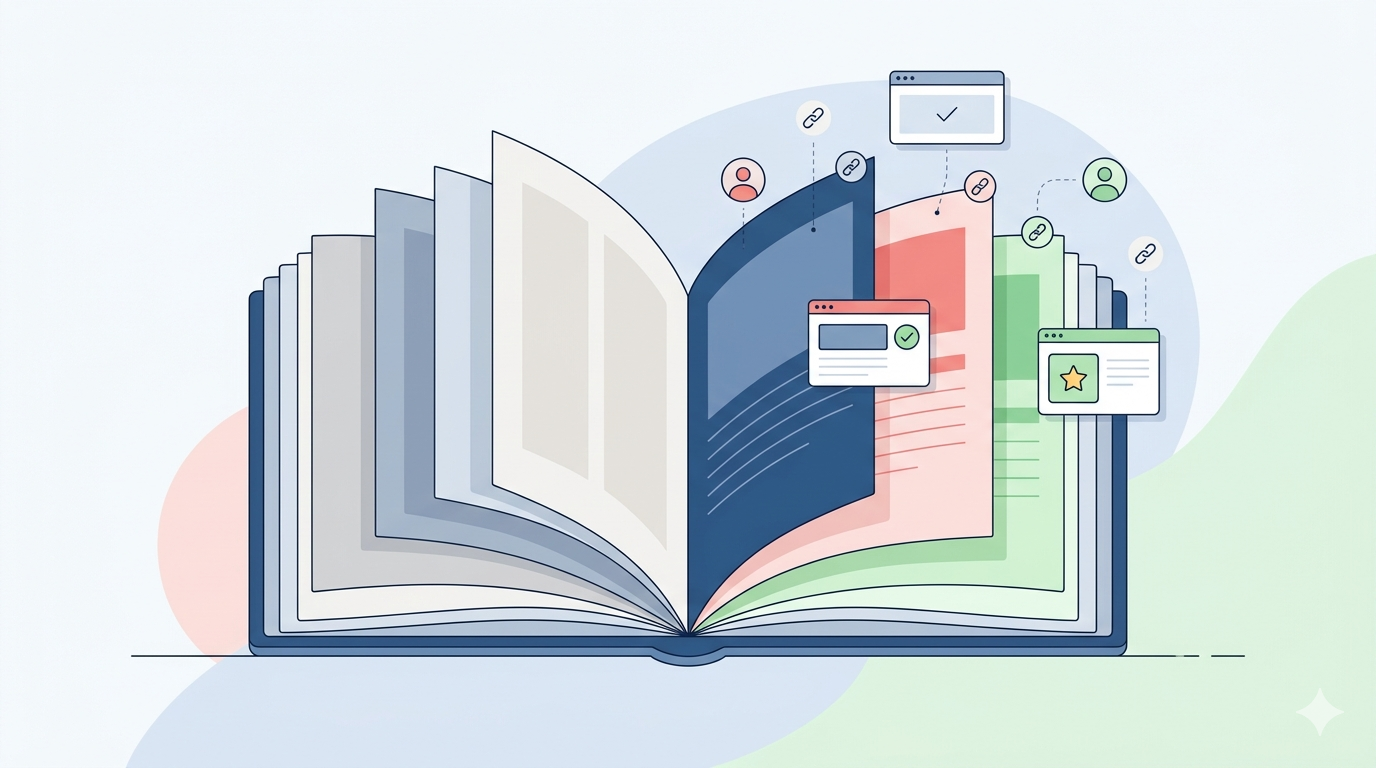
Some pages are like tools you keep on your desk. Others are like posters on a wall. You see them once, then stop noticing them.
The pages that get links are the ones people keep coming back to. They show up in blog posts, newsletters, and presentations because they help someone explain something, support a point, or save time. No one has to “build links” to them. They just get used.
Meanwhile, other pages, even well-written ones, fade after their initial burst of traffic.
The real difference comes down to this: people link to pages they can use when they’re creating something of their own.
Why “Good” Content Still Doesn’t Earn Links
A lot of SEO content looks like it’s working. It ranks, gets impressions, and even sometimes leads to conversions. But it doesn’t attract any backlinks.
Why? Because it’s only doing one job: getting read, and that’s it.
Backlinks come from something else entirely.
People who use backlinks are usually building something (an article, a research paper, an analysis, commentary, or comparison). They’re on a deadline, trying to finish a piece. That means they’re not looking for the “best” article. They’re trying to find something they can quickly use.
So they gravitate toward pages that make their job easier. For example, a clear stat, a simple chart, or a definition they can drop straight into their content without rewriting it.
That’s the sort of thing that gets embedded or cited, instead of perfectly “good” works that need a lot of re-explaining to be used.
The Pages That Get Links Change How People Work, Not Just What They Read
If you look at pages that consistently get backlinks in SEO, SaaS, marketing, and other media, they have one thing in common: they don’t behave like normal articles. They act like resources people can use.
A clear example is data-driven content.
HubSpot’s “State of Marketing” reports earn thousands of backlinks because they put key industry benchmarks in one place. Instead of searching for scattered stats, writers just cite HubSpot. With time, these reports have become what the industry relies on.
Ahref’s studies do the same thing. Their research on rankings and traffic gets widely cited because it’s based on large datasets most creators don’t have access to. It becomes a common source people use when they need proof in SEO writing.
This isn’t just limited to marketing tools. In developer communities, Stripe’s documentation follows the same logic. Its API and integration guides are so simple that they get cited by SaaS websites and technical education blogs. Essentially, Stripe became the default reference point for how modern payment infrastructure works. When someone explains payment flows, they don’t reinvent the explanation. They just link to Stripe.
These pages save effort. They remove the need to find, check, or restate information. That’s what makes them naturally linkable.
Make “Boring” Pages, Not Clever Ones
Most people think the most creative content gets the most links. But backlinks don’t rely on creativity (alone). They depend on how safe and usable a page feels
When someone adds a source in an article, they’re attaching their own credibility to it. So they tend to choose pages that feel:
- stable (won’t disappear or change in unexpected ways)
- factual (not opinion-heavy or debatable)
- reusable (easy to quote without needing explanation)
That’s why “boring” formats rule backlinks.
Take Wikipedia. Most of its pages are not written to be clever or entertaining. They’re written to be stable, neutral, and highly factual. But because of that, they get referenced constantly by blogs, news articles, and research papers.
A journalist writing about market trends won’t link to a think piece about “the future of growth.” They’ll link something like HubSpot’s report because it gives a clear, defensible number they can safely use in a claim.
An SEO writer making an analysis on ranking factors is probably not going to cite an opinion blog. They’ll cite Ahrefs’ studies because the data feels solid and repeatable.
So in the end, boring wins because it lowers the chance of being wrong.
And when people are publishing under pressure, avoiding that risk matters more than originality, style, or creativity.
Essentially, what we’re describing is “link magnets.”
What Makes a Page a Link Magnet
First of all, what are link magnets? They’re like ingredients in a kitchen, not finished meals. People don’t “consume” them once and move on. They keep reaching for them when they’re cooking something else.
They’re pages people (consistently) use in their own content.
- Data pages that get cited.
- Tools that get embedded.
- Templates that get reused.
- Guides that become reference points (instead of explanations people recreate).
That’s why they’re so “magnetic” for link building.
For example, let’s look at Notion’s productivity templates. They are constantly reused in real work environments: agencies plug them into onboarding systems, founders share them as “starter kits,” and teams embed them into their docs. A content calendar template, for instance, gets copied, modified, and reused as the foundation for actual publishing systems.
That reuse is what makes it a link magnet. It’s not the idea of a template, but the fact that it requires no setup.
Moz is another great example. Its early SEO guides not only explained ranking factors, they helped define the vocabulary of SEO itself. Concepts like domain authority and link equity weren’t just limited to Moz pages. They became the language people used in blog posts, client reports, and general discussions in the SEO space. Even now, newer tools and articles still cite Moz because they’re referencing the origin point of those definitions.
You see the same thing in other domains as well. Public databases like Google Trends or government economic data get cited all the time. Instead of explaining a trend, writers just link the data. The page becomes the evidence behind their point.
The takeaway: link magnets are assets people build with, not content people consume.
Designing for Reuse, Not Just Readability
Ok, so we talked about what a link magnet is, and why you can count on it to attract links. Now let’s look at how they’re actually designed.
Most “normal” content is built around readability. It focuses on explaining a topic in full, from beginning to end, so one person can understand it on its own.
Link magnets are built differently. They’re designed so other people can pull pieces out of them and use them somewhere else.
That changes what the page actually looks like.
A read-first page might be something like a long essay explaining “customer acquisition strategy” in narrative form. It walks through ideas, examples, and frameworks in paragraphs. It’s useful to read, but if you try to reuse it, you’d have to rewrite most of it.
The problem is structural. The insights are mixed together (and can’t be “extracted”), there’s nothing that stands alone, and you can only get value from it if you read the whole thing.
A reuse-first page breaks that same topic into parts people can actually take.
For example, instead of a long explanation of acquisition strategy, you might see:
- a pricing benchmark page (e.g. SaaS pricing ranges by company size) that people can cite in competitor analyses
- a viral loop diagram (like the ones used in product growth decks from companies like Airbnb or Dropbox) that gets screenshotted into presentations
- a conversion rate table by channel (email, paid ads, SEO) that gets reused in marketing reports
So less explanation, more components.
For link magnets, instead of optimizing for “can someone understand this?”, they’re optimized for “can someone reuse this without me?”
Why Some Pages Win Links Even in Crowded Spaces
In theory, there are thousands of pages that could become link magnets. In practice, only a small number actually do.
It’s not because they’re better written. It’s because they survive three real-world barriers: competition, credibility, and format.
1. Competition: better writing is not the deciding factor
The internet is flooded with similar content. There are dozens of posts on SEO, SaaS growth, marketing benchmarks, and product strategy
But backlinks don’t go to “the best explanation.” They go to the most usable reference.
That’s why an older Ahrefs study can (still) do better than newer articles on the same topic. Or why Stripe documentation often gets more links than fintech blog posts that explain the same thing more clearly.
Once something becomes the “default reference,” better writing rarely replaces it. People keep linking to what already has momentum.
2. Credibility: why similar pages get different results
This is where most content strategy goes wrong. Two pages can look almost identical, but perform very differently in backlinks.
For example, dozens of blogs publish “state of SaaS growth” style articles every year. But CB Insights-style market reports usually get far more citations because they use proprietary data and clear methods, not just opinions.
You see the same thing in developer ecosystems. Many companies publish API guides, but AWS documentation consistently dominates because it’s seen as the most reliable source of truth. It’s built for implementation, not just explanation.
In both cases, the winning page is the one people trust enough to use.
3. Constraints: why links concentrate on a few pages
A lot of content doesn’t get links because people only use what fits into how they actually create their own work.
There are three main limits:
Authority bias: People prefer citing sources others already trust. If a page is well-known and frequently referenced, it’s probably going to be cited again.
Distribution loops: Once a page shows up in high-authority blogs, newsletters, or decks, it gets repeated through those channels automatically.
Format dominance: Certain formats are easier to reuse:
- tables over paragraphs
- datasets over opinions
- documentation over explanations
- frameworks over narratives
This is why a simple benchmark table gets chosen over a beautifully written essay. It just fits better.
The combined effect
When these three forces stack together, the outcome is predictable.
The pages that attract the most backlinks are already trusted, structurally easier to resume, and fit the formats people naturally embed.
Final Thoughts
Most content on the internet is competing for attention.
But the pages that consistently earn links are competing in a different way. They’re part of how other people explain things, make arguments, and build their own work.
When a page moves from something people read to something people reach for, its role changes completely.
At that point, you wouldn’t need to chase links. They show up on their own.
At Linkyjuice, we help you create content built for that kind of reuse.