
Outreach automation is still a big part of modern link building and B2B growth, but just sending hundreds of emails a day doesn't really work anymore. What used to be a simple "send more, get more replies" game has gotten a lot more complicated. Now you've got deliverability systems, platform detection, AI-driven inbox filtering, behavioral scoring, and strict compliance rules all getting in the way.
The tools that actually work today are the ones that can balance scale with safety, personalization with automation, and efficiency with deliverability. In this guide, we'll walk through some of the top outreach tools in 2026, compare features and pricing, and call out which ones come with risks you should know about.
The Main Types of Outreach Tools
The outreach tool space has basically settled into four buckets: cold email infrastructure platforms, personalization-focused tools, all-in-one data and outreach systems, and enterprise sales orchestration suites.
Here's the quick breakdown of the main players:
- Instantly and Smartlead own the cold email infrastructure and scaling space
- Lemlist is all about personalization and getting people to actually engage
- Apollo bundles data, CRM, and outreach into one place
- Salesloft is the enterprise-level option for structured outbound workflows
Then there are tools like Reply.io, Mailshake, Klenty, SalesHandy, Overloop, SmartReach, and SalesBlink, which mostly fit somewhere within those same categories. They tend to be simpler, but usually give something up to get there.
The way to think about outreach tools now is less "how many emails can this send" and more "how well does this manage deliverability, adapt to behavior, and tie back to actual revenue." The best ones aren't really email senders anymore. They're more like lightweight revenue systems.
How Modern Tools Actually Get Emails into Inboxes
It doesn't matter how good your copy is if it lands in spam. That's what deliverability is all about, and it's where modern outreach tools really earn their keep.
Instead of blasting out mass campaigns, these tools try to behave more like a real human would. They gradually warm up email accounts so inbox providers start to trust them. They automatically skip invalid email addresses. They spread sends across multiple accounts and domains instead of hammering everything from one inbox. And they slow down sending to look more natural.
A lot of them also watch your domain reputation in real time and flag you if things start heading in a bad direction. The difference between sending 5,000 emails from one Google Workspace inbox versus spreading that same campaign across multiple warmed domains is massive in terms of risk.
That's really why tools like Instantly and Smartlead are in a different league compared to basic email sequence tools that just piggyback on Gmail or Outlook.
Personalization Isn't Just "Hi {first_name}" Anymore
Slapping someone's first name into an email stopped being "personalization" a long time ago. These days, tools use AI to actually tailor messages based on things like job title, seniority, industry pain points, and even how someone interacted with your last email.
A lot of platforms also support conditional copy blocks, meaning whole sections of an email can change depending on who's reading it. So the same campaign can say something totally different to an agency founder versus an in-house marketer versus an enterprise sales team, without you having to build three separate campaigns.
It's less like broadcasting and more like the email is actually paying attention to who it's talking to.
What Happens After Someone Opens (Or Ignores) Your Email
Good tools don't just send one email and call it a day. They support email and LinkedIn sequencing in the same campaign, trigger follow-ups based on what someone actually does, branch differently based on whether someone replied, clicked, opened, or completely ignored you, and space things out with time-based or action-based delays.
The behavioral trigger stuff is where it gets interesting. Someone who opens your email but doesn't reply might get a completely different follow-up than someone who never even opened it. The campaign adapts instead of just blasting the same message at everyone.
CRM Integration and Pipeline Connectivity
If your outreach tool isn't talking to your CRM, you end up with customer data all over the place and no real way to track what's actually working. The good tools fix this by syncing automatically with HubSpot, Salesforce, Pipedrive, and others. So when someone replies, books a call, or moves forward in the sales process, both systems update automatically without anyone having to manually log anything.
The tighter that integration is, the easier it becomes to actually connect your outreach activity to revenue.
How Tools Figure Out Who to Contact
Who you're reaching out to matters just as much as what you're saying. The more advanced platforms pull in a lot of extra context about prospects: company size and type, the tools they use, their job role, whether they've been to your website, engaged with your content, or shown any signs of being in buying mode.
They also score and rank leads based on how likely they are to actually respond or convert. The whole "spray and pray" approach is pretty much dead. Now it's about finding the people who are most likely to care about what you're sending.
Behind the Scenes of Automated Outreach
Workflow automation is what keeps campaigns running and adapting over time. These systems can send follow-ups automatically, pause when someone replies, change the next step based on how a prospect is engaging, and quietly remove contacts who aren't responding. Some can even tweak campaign behavior on the fly based on what the data is showing.
So instead of a static email schedule, you've got something that's constantly reacting to what's actually happening.
Using Data for Better Replies
A/B testing used to mean swapping out subject lines. Now you can test pretty much everything: opening lines, entire follow-up sequences, send times, how often you're emailing, the offer itself, the call to action. All of it.
And because you're combining that with real analytics, you're not waiting a whole quarter to find out what's working. Teams are making improvements week by week based on how actual prospects are responding.
What Happens After Someone Replies
The better link building tools now have what you'd call a "conversation intelligence" layer. They track how prospects interact across multiple touchpoints, classify replies (is this a yes, a maybe, an objection, or a bounce?), analyze response times, and automatically tag conversations so the sales team knows what to follow up on.
It turns outreach from a one-way broadcast into something that actually learns and feeds back into itself.
Pros of Outreach Automation Tools
These tools can look pretty similar from the outside, but they behave very differently once you're actually using them. Based on what SaaS outbound teams and SEO link builders are reporting, a few consistent wins keep coming up.
1. You can scale way up without adding headcount
This is probably the most consistent benefit. Teams regularly report going from their current outreach volume to 3x, 5x, even 20x once everything is set up properly. With tools like Instantly and Smartlead, you can have hundreds of conversations going across multiple domains every day without anyone manually doing the sending.
2. Outreach becomes a real system instead of a guessing game
Instead of ad hoc emailing, you actually have something predictable. You can start to forecast reply volume, conversion rates at each sequence step, and pipeline per campaign. Like, an agency might know from experience that every 1,000 targeted emails gets them roughly 40 replies, 10 discovery calls, and 2 to 3 qualified deals.
3. You can run experiments way faster
Testing isn't just subject lines anymore. You can test opening hooks, offer positioning, full sequence flows, and send timing. And because you're doing it at scale, the feedback loop is much tighter. You're improving weekly instead of quarterly.
4. You can get a lot more targeted
When these tools are set up right, you can get really specific about who you're reaching. Filtering by job title, company type, tech stack, engagement signals like opens and clicks. For that kind of depth, something like Apollo tends to outperform tools that are purely focused on sending.
Cons of Outreach Automation Tools
1. Deliverability decay is the biggest thing that bites people
This is the most common complaint across the board. A campaign can start out strong and then slowly fall apart if warm-up gets inconsistent, bounce rates climb, or you push volume too hard. A lot of teams see great early results and then wonder why inbox placement gradually tanks.
2. Recipients can usually still tell it's automated
Even with AI personalization and fancy tokens, people who get a lot of outreach can smell a template. Replies tend to feel less genuine than manual outreach, the same templates lose their edge over time, and at scale, personalization can start to feel shallow. This is especially true in link building, where people are getting hit with nearly identical pitches all day.
3. Too many tools starts to become its own problem
A lot of growth teams end up with separate tools for sequences, lead data, CRM updates, and tracking, and then wonder why nothing lines up. Mismatched data, inaccurate reporting, duplicate contacts. It gets messy fast.
4. The powerful tools have a real learning curve
Smartlead and Salesloft are genuinely impressive, but they're not something you just plug in and go. A lot of people underestimate how much setup, deliverability work, and ongoing maintenance goes into actually getting results.
The Best Outreach Automation Tools in 2026
1. Instantly.ai
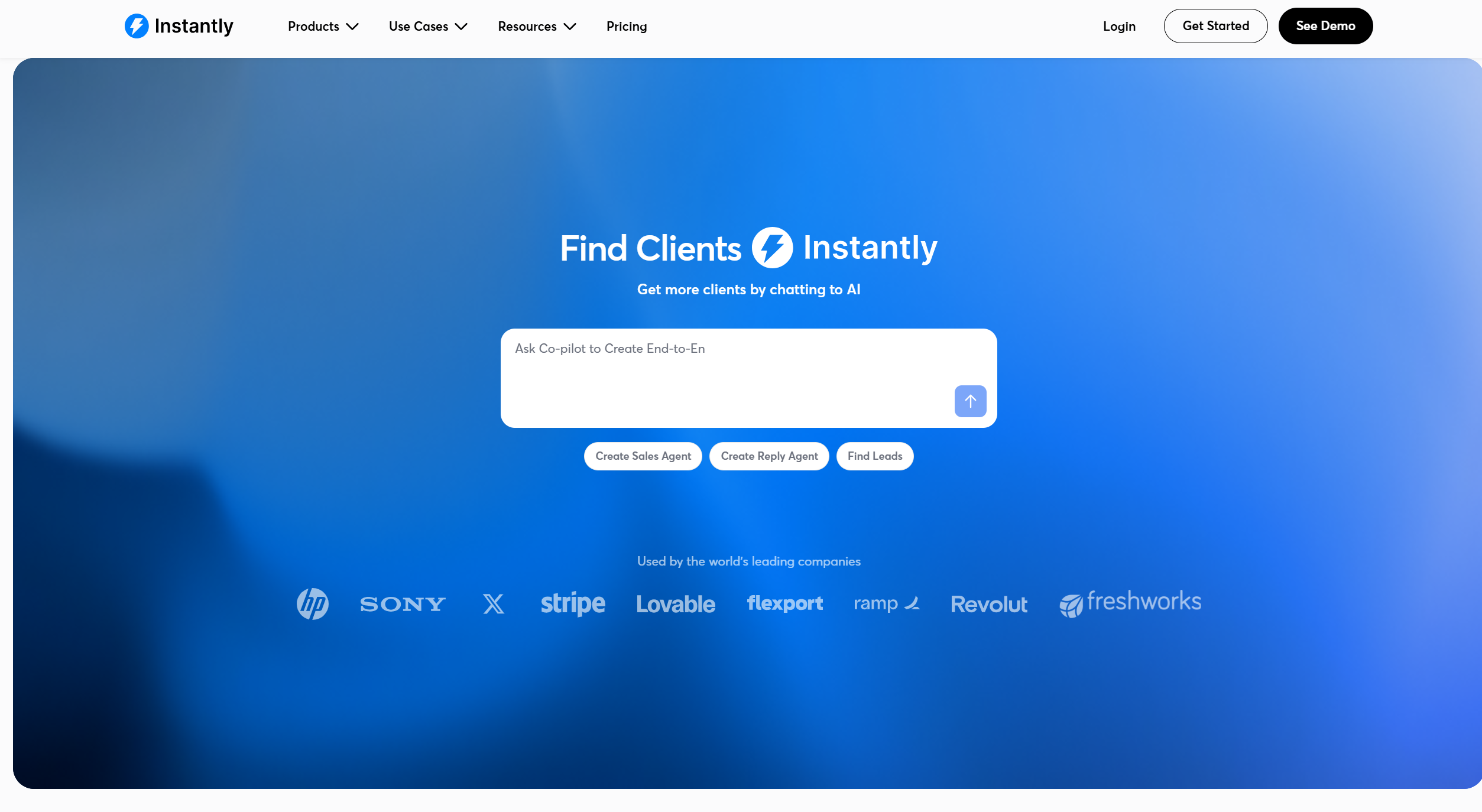
Instantly is probably the most widely used cold email platform among agencies right now, and it's mostly because they've really focused on deliverability and inbox scaling. If you're running high-volume campaigns and domain reputation keeps you up at night, this one's worth a close look.
Key strengths:
- Built-in warm-up that actually improves inbox placement over time
- Multi-inbox rotation so you're not hammering everything from one address
- Smart sending throttles that make your campaigns look more human
- Straightforward campaign builder with sequencing and automated follow-ups
- Solid deliverability monitoring and bounce tracking
Where it falls short:
- Not much on the LinkedIn or multi-channel side
- Personalization is decent but not cutting edge compared to AI-heavy tools
- The UI is functional but not built for deep CRM-style workflows
Pricing: Tiered by inbox volume and sending capacity. Good value when you're scaling, less so if you're sending low volumes.
Best for: Cold email agencies, SEO outreach, SaaS outbound teams
2. Smartlead.ai
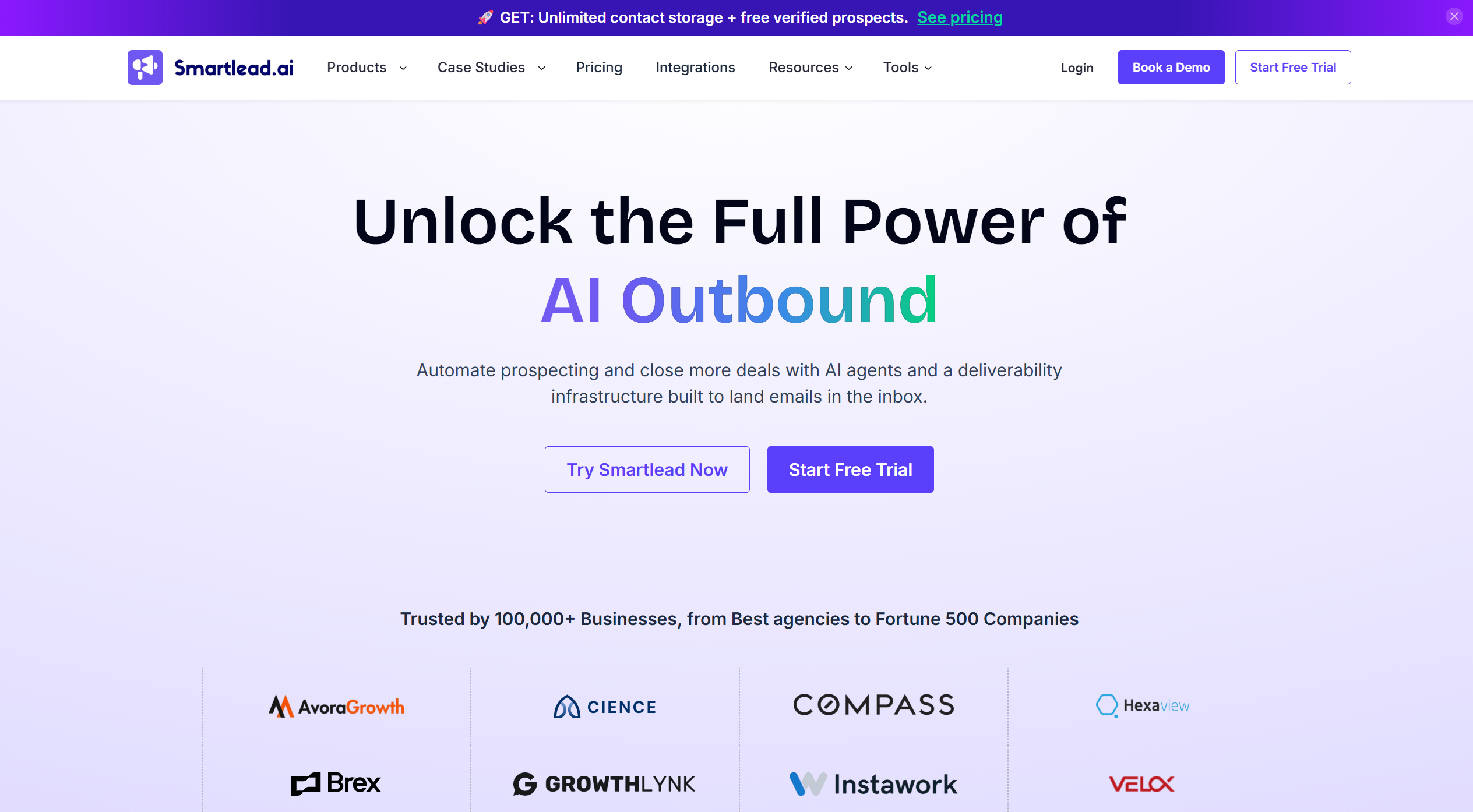
Smartlead is the heavier-duty option. It's built for teams juggling multiple domains, inboxes, and more complex workflows. If Instantly is a sports car, Smartlead is more like a truck.
Key strengths:
- Really advanced inbox rotation and sender profile management
- Strong conditional campaign logic and automation
- Solid warm-up and deliverability protection built in
- Unified inbox so you can manage replies across all your accounts in one place
- Built for serious multi-domain operations
Where it falls short:
- Steeper learning curve than most
- Reporting can feel a bit clunky
- Probably overkill for small teams or simple campaigns
Pricing: Scales with usage and inbox volume. The higher tiers are where the deeper automation lives.
Best for: Agencies, high-volume lead gen teams, outbound sales operations
3. Lemlist
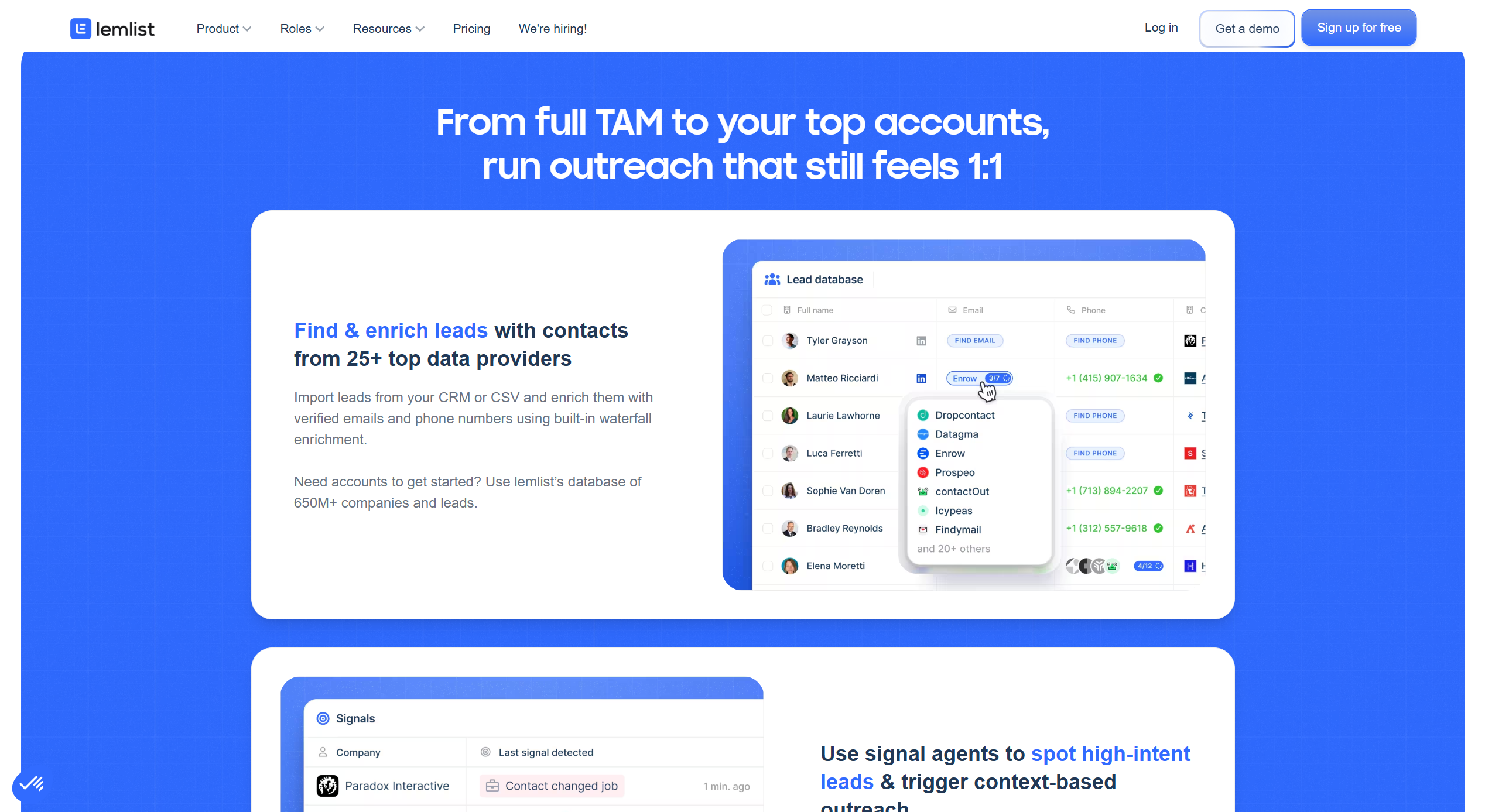
Lemlist takes a different approach. Instead of going hard on infrastructure, it focuses on making outreach feel more personal and human. Good fit if you care more about reply quality than raw volume.
Key strengths:
- Really solid personalization, including dynamic images and variables
- Multi-channel campaigns that combine email and LinkedIn
- Strong sequencing and campaign logic
- Built-in A/B testing
- One of the easier tools to get up and running quickly
Where it falls short:
- Deliverability tooling isn't as robust as the infrastructure-first platforms
- Getting to very high volumes takes more care
- Costs climb pretty quickly as you scale up
Pricing: Per-user with feature-based tiers. The good personalization and multi-channel stuff is mostly in the higher plans.
Best for: Link building outreach, boutique agencies, founder-led outbound
4. Apollo.io
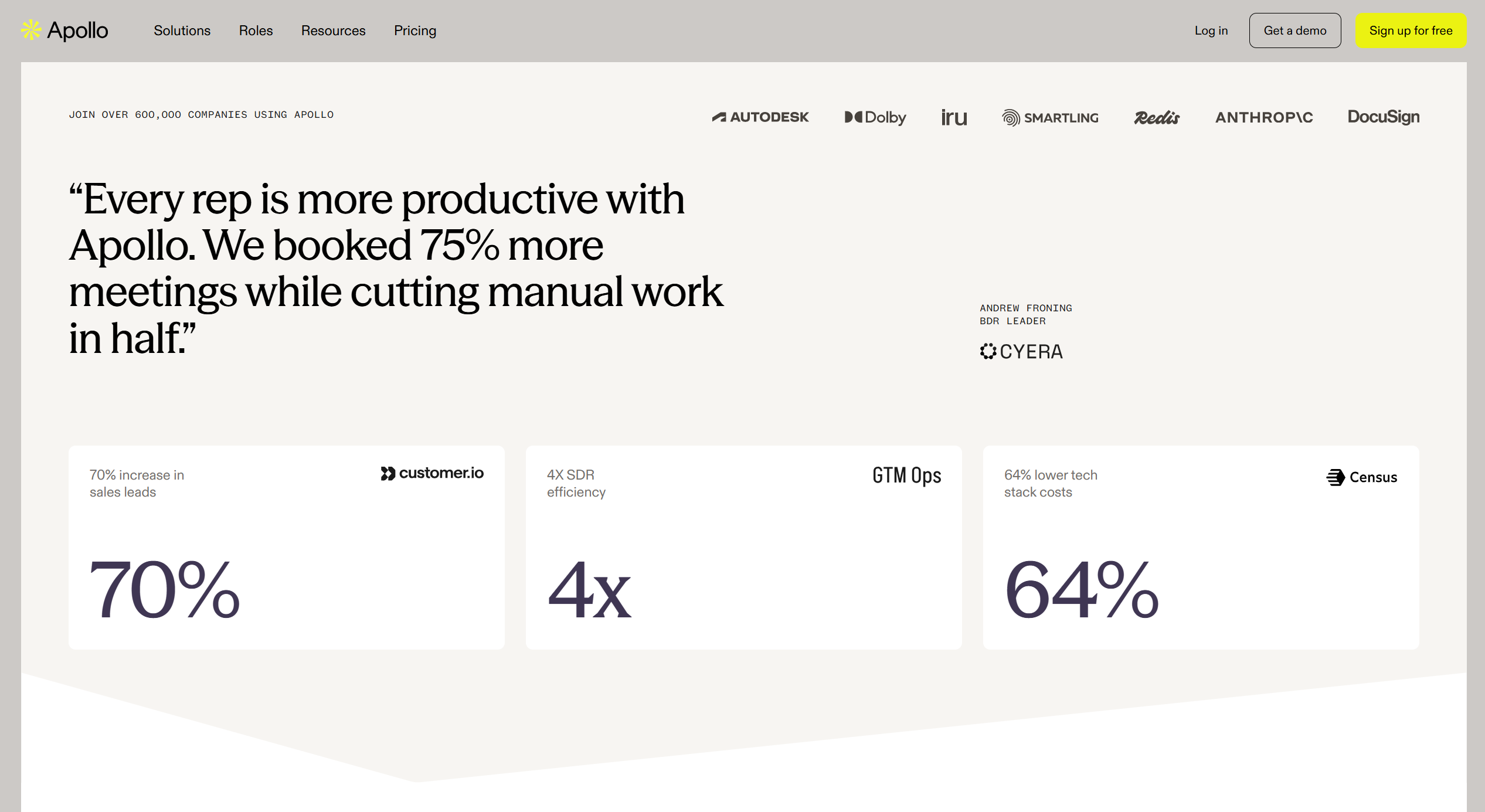
Apollo is kind of its own thing. It's not purely an outreach tool. It's more like a data engine, CRM layer, and sequencing platform rolled into one. The big selling point is the built-in B2B contact database, which means you're not as dependent on external data providers.
Key strengths:
- Massive integrated B2B contact database
- Built-in email sequencing and outreach automation
- CRM-style pipeline management
- Advanced filtering and targeting
- Generally cheaper than building a separate stack for data plus outreach
Where it falls short:
- Deliverability isn't its strong suit
- Personalization depth is limited compared to tools that specialize in it
- Data accuracy can be hit or miss depending on industry and region
Pricing: Has a freemium tier and pretty accessible paid plans, but the really useful features like enrichment and automation are behind the higher tiers.
Best for: Startups, in-house sales teams, early-stage outbound
5. Salesloft
Salesloft isn't really built for SEO outreach or agency workflows. It's an enterprise tool through and through. Think governance, structured workflows, and serious reporting rather than scrappy cold email campaigns.
Key strengths:
- Really structured sales engagement workflows
- Deep Salesforce integration
- Strong analytics and pipeline tracking
- Good team collaboration features
- Enterprise-grade compliance and governance
Where it falls short:
- Expensive, especially for smaller teams
- Way more tool than you need for simple campaigns
- Not very flexible if you like to experiment with creative outreach
Pricing: Custom enterprise pricing based on seats and features. One of the pricier options in the category.
Best for: Enterprise sales organizations, large B2B companies, structured outbound teams
Common Mistakes Teams Make
Even great tools can cause headaches if they're not set up right. The most common issues people run into are deliverability degradation, account restrictions, and CRM integration falling apart.
Deliverability problems usually trace back to poor warm-up, messy lists, or high bounce rates. CRM sync issues tend to come from misconfigured APIs or data that's structured differently across platforms. Campaign logic errors usually happen when sequences aren't properly set up with conditions. And inbox rotation failures can create weird sending patterns that make you look more like a bot.
Overcomplicating the tech stack is also a really common trap. The more disconnected tools you pile on, the messier things get, and the harder it becomes to figure out what's actually working.
Not every tool is built to keep things healthy long-term either. Aggressive LinkedIn automation tools are a good example. They simulate human behavior in the browser, but they still leave detectable patterns that can get accounts restricted or flagged. And tools that don't have the basics covered, like warm-up, bounce handling, suppression lists, and inbox-level sending controls, tend to quietly degrade over time without you even noticing until it's too late.
Making Outreach Automation Work in 2026
Honestly, the tool matters less than how you use it. The teams that consistently get good results are the ones who treat outreach like a system, not a fire-and-forget process.
That means getting deliverability right before worrying about volume, running A/B tests constantly, targeting based on behavior and intent rather than just blasting big lists, and setting up follow-up sequences with proper stopping rules so you're not pestering people who've already replied. List hygiene, verification, and cleanup are boring but important. And multi-channel campaigns work better when you're thoughtful about them rather than aggressive.
The best teams think of outreach as something that learns and improves over time. Not just a way to push messages out.
How to Choose the Right Tool
It really comes down to what you need and how big you're going.
- Need high-volume sending with solid deliverability? Instantly or Smartlead.
- Care more about personalization and engagement? Go with Lemlist.
- Want data, prospecting, and outreach all in one place? Apollo.
Outside of the platform itself, think about how well it integrates with your CRM, whether your team can actually get up to speed on it, how much personalization you really need, and how costs scale as you grow.
Most tools use one of three pricing models: per seat, usage-based, or a hybrid. Entry-level tools are usually freemium or cheap with limited sending. Mid-tier tools scale by inboxes, contacts, or sequences. Enterprise tools go custom. The starting price is rarely the thing to focus on. It's what happens to that price as you scale that usually surprises people.
Frequently Asked Question
What is the difference between cold email infrastructure and all-in-one outreach tools?
Infrastructure tools (like Instantly or Smartlead) focus on multi-inbox scaling, warm-up, and deliverability. All-in-one tools (like Apollo) combine B2B contact databases with sequencing.
How many emails can I safely send per inbox per day?
Most experts recommend keeping limits between 30 to 50 emails per inbox per day to protect sender reputation and avoid triggering spam filters.
Is cold email outreach still legal and compliant?
Yes, provided you comply with regional regulations like GDPR or CAN-SPAM, which generally requires including an easy unsubscribe mechanism and accurate sender information.
Conclusion
Outreach automation in 2026 is really about building something sustainable. A system that keeps your inbox reputation intact, reaches the right people in a way that feels human, and actually connects back to revenue.
The tools that do that well are worth investing in. The ones that just help you send more emails faster are increasingly a liability.
If you want help building outreach campaigns that are actually built for the long game, reach out to our team at LinkyJuice and we'll help you get there.
About the Author
Davit Nazaretyan writes about link building, backlink audits, and SEO automation at LinkyJuice. His work focuses on separating what actually moves rankings from what just looks like it does: from cleaning up toxic backlink profiles to building outreach systems that hold up against algorithm updates. Connect on LinkedIn.