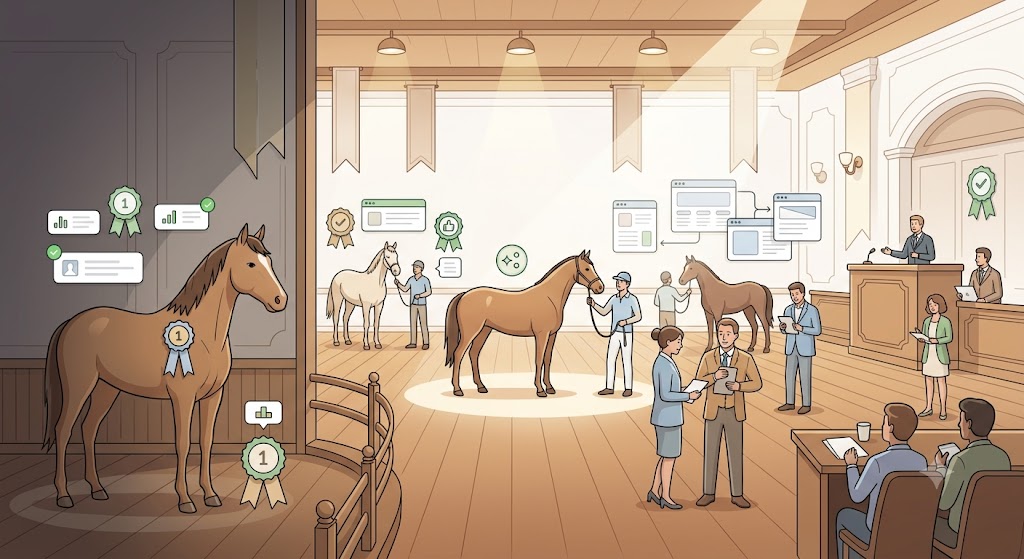
Ranking and being cited by AI are two different outcomes. A page can rank #1 on Google and still be left out of an AI-generated answer. A page can rank on page two and still get cited by ChatGPT or Perplexity.
Traditional SEO optimizes one sequence: page, then ranking, then click. AI search optimizes a different sequence: source, then selection, then inclusion, then trust. Both start with a page. They end in different places.
The SEO Game Changed
A #1 ranking used to guarantee visibility. Now it only guarantees a chance at visibility. Whether an AI system actually names, quotes, or links to a page is a separate decision, made by the system, using its own criteria.
"Everyone lumps 'AI search' together like it's one system with one set of rules. It isn't. We've watched the same client dominate Google AI Overviews (because Overviews still lean hard on the top 10) and get completely skipped by AI Mode and Perplexity, which barely look at rankings at all. If your strategy doesn't know which system it's talking to, it's guessing."
Davit Nazaretyan, Founder of Linkyjuice
Ranking and Getting Picked Are Not the Same Thing
In traditional search, the user picks the result. Google ranks a list of pages, the user scans it, and the user decides what to click.
In AI search, the system picks the source. The user asks a question, the AI builds an answer, and the AI decides which sources back that answer up. The user never sees a ranked list. The user only sees the finished answer.
One Search. Two Different Processes.
Recent analysis from Moz found that most citations inside Google's AI Mode come from pages outside the organic top ten. That means ranking well and getting selected are increasingly separate outcomes.
Google Results: #1 Website, #2 Website, #3 Website. Ranking gives you visibility.AI Answer: Source A cited, Source B cited, #1 ranking page ignored. Selection decides inclusion.
Most Searches Don't Even Lead to a Click Anymore
Most Google searches no longer result in a click. SparkToro's most recent clickstream study found that 68% of U.S. Google searches in early 2026 ended with no click to any website, up from about 60% two years earlier. Out of every 1,000 searches, only around 276 now send a visitor to the open web, down from 374 two years ago.
This does not mean rankings stopped mattering. Transactional queries, branded searches, and high-intent traffic still reward a strong position. What changed is that ranking is no longer the whole visibility picture. AI citations, brand mentions inside generated answers, and inclusion in a summary the user never clicks past are now a second, separate layer of visibility. A brand can appear there and never register a session in Google Analytics, and it still counts. For more on this shift, see what zero-click search means for your strategy.
Your Website is Only One Signal
A brand's visibility now depends on more than its own site: industry publications, backlinks, reviews, expert mentions, podcasts, communities, AI citations, social profiles, and digital PR all feed into it.
Why Do the Same Brands Keep Getting Cited by AI?
AI tools tend to name the same brands repeatedly for the same topics. Ask about marketing and HubSpot often comes up. Ask about SEO data and Ahrefs comes up. Ask a health question and Mayo Clinic comes up.
This happens because of repetition, not luck, and not one strong article. These brands are mentioned across many independent sources, often enough that an AI system treats the mention as a default rather than a possibility to weigh. One brand mention barely matters. A hundred mentions, across a hundred unrelated sources, start to function as a signal of trust.
A related meta-analysis of 54 studies, scoring 23 AI citation factors across roughly 17 million citations, found that brand mentions correlate about 3x more strongly with AI visibility than backlinks do. Backlinks still drive Google rankings. For AI citation specifically, being mentioned outperforms being linked to.
One-Time Ranking vs. Repeated AI Citation
A single ranking is a one-time event. Repeated citation is a reputation. An article can rank, spike in traffic for a news cycle, and fade. That's a ranking. A brand that gets referenced again and again, across different questions and platforms, becomes the answer a system reaches for by default. That's a reputation.
This is the same pattern covered in why authority will matter more than ranking: how a system builds trust in a source before it starts citing that source automatically.
Example: Two companies publish articles on the same topic in the same month. Company A writes a competent, generic overview. Company B publishes original research that gets picked up by a few industry publications. Both articles may rank equally well on Google. But when an AI system needs a source to support an answer, Company B has already given it a reason to be picked. Company A has not.
What Makes AI Systems Choose One Source Over Another?
Original information gets cited more than rehashed content.
Yext's analysis of 6.8 million AI citations found that first-party, verifiable data accounted for more than half of all distinct citation sources across major AI platforms.
Topic focus builds recognition faster than topic breadth.
Publishing across many unrelated subjects dilutes a brand's expertise signal. Publishing consistently on one subject strengthens it.
External mentions confirm what a brand claims about itself.
A mention from a source a brand doesn't control (a publication, a partner, a press mention) is harder to fake than a self-published claim.
For more detail on the mechanics behind source selection, see how AI search chooses which sources to trust.
AI platforms don't agree on which sources to cite. An analysis of 680 million AI citations by Averi found only about 11% overlap between the domains cited by ChatGPT and the domains cited by Perplexity. Ranking on Google supports one visibility channel. It does not automatically transfer to the others.
Technical SEO Factors That Affect AI Citation
Five technical factors influence whether AI systems can parse and cite a page:
- Schema markup. FAQPage schema is still processed by Perplexity's and Bing's AI crawlers, even after Google removed it from its own rich-result display in May 2026.
- Entity density. Pages that name specific tools, organizations, people, and standards are cited more often than pages that stay vague.
- Page speed. One dataset found pages loading under 0.4 seconds averaged 6.7 citations, compared to 2.1 citations for pages slower than 1.13 seconds.
- Freshness. New content can enter AI citation pools within 3–5 days of publishing. Google ranking typically takes 3–6 months to reflect the same page. Citation relevance then tends to decay starting around week 13, so content needs regular updates to stay in the citation pool.
- Bot access. An
llms.txtfile and unblocked crawler access for AI bots are now baseline requirements, not optional extras.
These factors don't replace a content strategy. They determine whether the content strategy can reach the system doing the choosing.
How ChatGPT, Perplexity, and Google AI Overviews Cite Sources Differently
Because these systems disagree, "we rank #1" and "we're cited in AI Mode" and "we're cited in Perplexity" are three separate claims. Most teams track only the first one.
Stop Asking How to Rank. Start Asking This Instead.
The old question was: how do I get this page to rank? The current question is: why would a system pick me at all?
This doesn't replace SEO fundamentals. It builds on them. Technical SEO, content quality, and links still matter, because they now feed two systems instead of one. The difference is the target. The goal is no longer just a position on a page. The goal is to become a source a system selects without needing to weigh alternatives.
There's a business case behind this too. G2 found that 85% of buyers think more highly of a software vendor when AI includes it in an answer. Growth Memo found that an AI's top-recommended option becomes the user's actual choice 74% of the time. Being the source an AI system names is not a vanity metric. For a growing share of buyers, it functions as the shortlist.
Frequently Asked Questions
Does ranking #1 still matter in SEO?
Yes. Rankings still matter, especially for transactional and branded searches. What's changed is that ranking is no longer the only path to visibility. AI answers and zero-click results now form a second, parallel channel.
Why doesn't my website appear in AI Overviews?
Ranking well does not guarantee inclusion. AI systems weigh topical association, external mentions, original information, and expertise signals in addition to ranking position. See why your #1 ranking isn't showing up in ChatGPT for the most common reasons this happens.
How do AI search engines choose which websites to cite?
They weigh relevance, originality, and how consistently a source appears across independent sources on a topic.
Can a website rank on Google but not appear in AI search?
Yes. Ranking and citation are evaluated by separate systems, using different criteria. A page can succeed at one and miss the other.
How do brands become the source AI recommends?
By staying consistent about what they're known for, publishing original information instead of rehashed content, and earning mentions from sources they don't control: publications, digital PR, and partnerships.
Is SEO dead because of AI?No. The scope of SEO is expanding, not disappearing. It now includes visibility everywhere people look for answers, not only the results page.
What's the difference between ranking and being cited by AI?
Ranking earns a spot on a page a person might click. Citation earns a spot inside an answer a system already built. One is a placement. The other is an inclusion.
The Bottom Line: Citation Beats Ranking
Rankings aren't disappearing. They were never the finish line, just an early checkpoint in a race that kept going.
Brands that get cited repeatedly share one trait: they're mentioned, cited, and vouched for by enough independent sources that a system treats them as the obvious answer. That reputation doesn't come from one ranking. It comes from consistent, independent validation over time, which is also where the future of link building is headed: earning attention outside your own site, on top of what you build on it.
The goal isn't to rank higher. The goal is to become the obvious source.
At LinkyJuice, this is the work we do: strategic link building, digital PR, and campaigns built to earn independent mentions that AI systems select on, while strengthening the SEO fundamentals that still drive rankings. Book a call if you want to be the brand systems keep choosing, and still show up when someone searches for you directly.
About the Author
Davit Nazaretyan writes about link building, backlink audits, and SEO automation at LinkyJuice. His work focuses on separating what actually moves rankings from what just looks like it does: from cleaning up toxic backlink profiles to building outreach systems that hold up against algorithm updates. Connect on LinkedIn.