Most link building campaigns start with a target number: 20 backlinks, 50 backlinks, whatever the retainer covers. That number is almost always a guess. The SERP already tells you the real one, and reading it first can save months of link building pointed at a page that was never going to compete.
Most SEO advice starts with the same line: know your competition. Good advice, usually followed by the wrong execution.
When people "analyze the competition," they pull up Ahrefs, check domain ratings, count backlinks, and decide whether they can win. That's comparing scorecards, not building a link strategy. Google isn't running a popularity contest between websites. Every time someone searches, it's asking a much more specific question: what kind of page, with how much authority behind it, should show up here? Answer that before you build a single link, not after.
Google Ranks Pages, Not Websites
Your domain doesn't rank. Individual pages do.
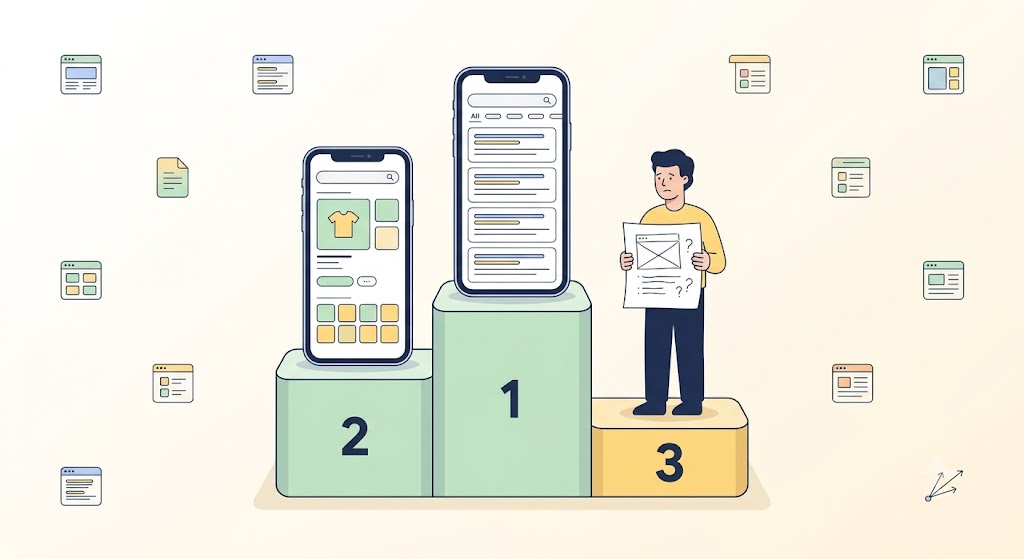
A website can have massive authority, thousands of backlinks, and years of trust with Google, and still lose a specific ranking battle because the wrong page is competing, or the right page doesn't have enough behind it yet. If someone searches "how to pick a running shoe," Google isn't asking "which brand do I trust most." It's asking what kind of page actually helps someone pick a running shoe, and how much proof that page needs to earn a spot on page one. A detailed buyer's guide from a mid-sized niche site can beat a homepage from a major retailer.
Domain-level authority is real and it matters. But it's a baseline reputation. The individual page still has to earn its ranking on its own terms, with its own authority signals.
The Real Question Isn't What to Write. It's How Much Authority to Build.
Before you write anything or build a single link, look at what's already ranking. The SERP is showing you Google's interpretation of what the page needs to be, and, less obviously, how much external validation it needs to earn that spot.
The standard way to describe this in the industry is the four intent types (informational, navigational, commercial, and transactional) mapped against the "3 C's": content type, content format, and content angle, a framework popularized by Ahrefs' search intent research. Search "how to build backlinks" and you get educational guides and frameworks, an informational, low-commercial-intent cluster. Search "best SEO tools" and you get comparison pages and reviews, commercial investigation. Search "link building agency" and it's all service pages and landing pages, transactional. Search Engine Land has made the same point directly: matching what a searcher actually wants outperforms keyword targeting on its own.
That's the content half of the equation. The half most guides stop at. The authority half is just as decided by the SERP, and it's the part link builders actually need.
Why Good Content Still Doesn't Always Rank
You can write something genuinely good, well-researched, clearly organized, accurate, and still sit on page four while worse content takes the top spots. It usually comes down to one of four mismatches:
- Wrong format. You wrote a long-form tutorial where Google is rewarding quick list pages. Format signals intent alignment, and this one doesn't match.
- Wrong depth. Pages ranking are advanced and detailed, assuming the reader already knows the basics. Your solid beginner introduction doesn't compete with that.
- Weak authority. You're a newer site competing against pages with years of topical backlinks behind them. The content might be equal. The authority signal isn't, and no amount of rewriting fixes that.
- Wrong intent match. You wrote an informational piece for a query where searchers want commercial options. Google can read that mismatch even in strong writing.
Weak authority is the mismatch link builders are actually positioned to fix, and it's also the one most often guessed at instead of measured.
Authority Isn't Universal. It's Contextual.
A backlink isn't a vote, it's a signal, and context shapes what it means.
Say two pages are competing for "best project management software." Page A has 80 backlinks scattered across random lifestyle blogs, a pet care site, and a few coupon directories. Page B has 25 backlinks from software review publications, productivity newsletters, and business tool roundups. Page B is almost certainly sending the stronger signal, not because it has more links, but because every link is saying "this page belongs in a conversation about software."
Who links to you, what they cover, and why they linked all factor into what that link is worth for this specific page. This is why a smaller site with a tight, topically relevant link profile can outrank a bigger site with a massive but scattered one. We've written more on exactly what makes an anchor and a link relevant in context in our guide to anchor text in SEO.
How Much Authority Does This Specific Page Actually Need?
Start with keyword difficulty as a rough authority proxy.
Ahrefs' benchmarks map roughly:
- KD 20 → about 22 referring domains
- KD 40 → about 56 referring domains
- KD 70 → about 202 referring domains
- KD 90 → about 756 referring domains
These are planning benchmarks, not a guarantee, but they turn a guess into a starting range.
Then check the actual median, not the average, of the pages already ranking.
Semrush's ranking factors research found top-ranking pages average 2,418 backlinks, but the median is only 13. A handful of outlier pages with massive link counts will drag the average far above what's actually required to compete. The median of the top 5-10 results for your exact keyword is a far more honest target than any industry-wide number.
Don't assume more is always the answer.
Google's Gary Illyes has said plainly that very few links are needed to rank pages, and for lower-difficulty terms, that holds up in practice, some long-tail pages rank on a single relevant link. Chasing volume on a page that only needed a handful of the right links wastes budget better spent elsewhere.
Once you have that number, compare it to what the page currently has. That gap is the actual link building target, not a retainer-driven guess. Our guide on how many backlinks you really need to rank walks through the full calculation.
Page-Level Authority vs. Domain Authority
Domain authority metrics like DR can give a rough sense of a site's footprint, but they mislead badly if treated as the whole story. A high-DR domain doesn't guarantee every page it publishes will rank, each page has to build its own relevance signals: internal links, topical depth, and page-level backlinks specific to that URL.
This is also why newer or smaller sites can win. If they publish the right page type, match intent precisely, and attract genuinely relevant links at the right volume, they can beat a bigger brand that threw content at a keyword without measuring what it actually needed.
A Pre-Link-Building SERP Audit
Run through this before a single outreach email goes out:
- Search the keyword as a real user would. Look at the full first page, not just the top 3.
- Classify what's ranking. Guide, comparison, tool, product page, service page. If eight of ten results share a type, that's the signal, not a coincidence.
- Pull referring domain counts for the top 5-10 results and calculate the median. That's your real authority target, not an estimate.
- Check the topical relevance of those competitors' links, not just the count. A tight, relevant profile at a lower count often outperforms a scattered one at a higher count.
- Measure the gap between your page's current authority and the target, and build against that specific number.
If the competing pages themselves look thin on relevant links, that's often the actual opening, worth confirming with a proper competitor backlink analysis rather than assuming the gap is bigger than it is.
What This Means for Link Building
Link building works best pointed at a specific, measured target, not a round number picked in advance. Before acquiring links, know exactly what page you're strengthening, what authority gap it's actually facing based on the SERP, and what role it plays for the query.
Not every link opportunity is worth the same effort either, a page that only needs a handful of the right links doesn't need a volume campaign, it needs a few genuinely relevant ones. Our guide on telling a real link opportunity from a link target covers how to spot which links are actually worth pursuing once you know your number.
A link from a site covering closely related topics, pointing to a page that matches both the query's intent and its authority requirement, is a link doing real work. Building past what the SERP actually calls for doesn't rank a page faster, it just spends budget the data never asked for.
Frequently Asked Questions
How many backlinks does a page actually need to rank?
There's no universal number. It depends on the keyword difficulty and the referring domain counts of the pages currently ranking. Ahrefs' benchmarks put roughly 22 referring domains at KD 20 and over 750 at KD 90, but the more reliable method is pulling the actual median referring domain count from the current top 5-10 results for your exact keyword.
Should I match a competitor's exact backlink count?
Not the count, the median, and adjusted for quality over quantity. A tightly relevant profile at a lower count can outperform a scattered one at a higher count, since Google reads context, not just volume.
Does domain authority determine rankings?
Not on its own. DR is a rough indicator of a site's overall backlink strength, but Google evaluates individual pages on their own relevance and page-level authority signals. A high-DR domain doesn't guarantee every page it publishes will rank.
What does page type mean in SEO?
Page type refers to the format and purpose of a page, a guide, a comparison, a service page, a data study. Google rewards specific page types for specific queries, and matching your page type to what's already ranking is part of ranking successfully, alongside having the authority to back it up.
Why can smaller websites outrank bigger ones?
Because rankings are decided at the page level, not the domain level. A smaller site with a page that matches intent, goes to the right depth, and has the right amount of relevant backlinks can outrank a larger domain that missed any one of those factors.
Do backlinks matter differently depending on the keyword?
Yes. The authority threshold varies with how competitive the SERP is, and the value of individual links varies with topical relevance. A link from a closely related source carries more weight for your specific page than one from an unrelated site.
Ready to Build Links Against a Real Number, Not a Guess?
LinkyJuice helps brands earn relevant, high-quality links sized to what a page actually needs to rank, not a retainer-driven volume target. Book a call and we'll pull the real authority gap for your target pages together.
About the Author
Davit Nazaretyan writes about link building, backlink audits, and SEO automation at LinkyJuice. His work focuses on separating what actually moves rankings from what just looks like it does: from cleaning up toxic backlink profiles to building outreach systems that hold up against algorithm updates. Connect on LinkedIn.