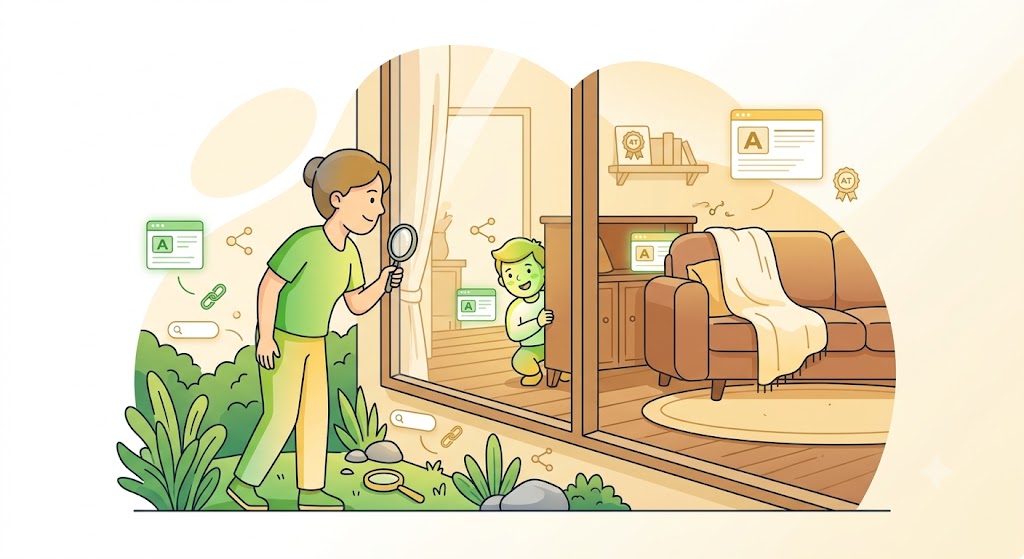
Stop Hunting for Links. Start Following the Clues.
Most people do link building backwards.
They open a spreadsheet, find a hundred websites that look impressive, and start sending emails asking, “Would you link to us?”
That’s not a strategy. That’s cold calling with extra steps.
The better question is: who is already linking to content like yours (and why)?
The best link opportunities usually aren’t hidden. They leave clues.
Competitor backlinks. Resource pages. Broken links. Unlinked mentions. Content gaps.
All of these signals reveal where links are already happening and where your site has a realistic chance of earning one.
That’s the idea behind a backlink opportunity map: stop guessing at prospects and start following the trail.
Instead of guessing, you're prioritizing based on:
- Relevance (does this actually fit your niche)
- Likelihood (is this site realistic, or a pipe dream)
- Competitor activity (are they already getting links here)
- Existing demand (does the page even want to link out)
1. Your Competitors Already Did Your Market Research. Steal It.
Your competitors have already tested which sites are willing to link to companies like yours, if three of them earn a link from the same industry resource page, that's a pattern worth acting on, not a coincidence. This is exactly what a competitor backlink gap analysis is built to surface. For the full step-by-step process, including how to filter, score, and prioritize what you find, see our complete guide on competitor backlink analysis.
2. Find Sites That Already Love Linking Out
Don't ask a site to link to you. Find the sites that already can't help themselves.
Think "best tools" pages, industry roundups, curated guides, statistics pages, expert collections. These pages exist for one reason: to link out. The editorial decision to link to outside content has already been made. You're not asking them to change their whole approach. You're just asking to be added to a list they're already building.
Your job is simple: find the missing piece on a page that clearly wants more pieces.
3. Resource Pages Are Basically Backlink Vending Machines
Some pages online are basically link databases hiding in plain sight. Industry directories. Educational resource hubs. Association pages. "Recommended tools" sections buried on someone's site.
These pages are goldmines because the editorial intent is already baked in, the audience relevance is obvious, and the pitch practically writes itself. You're not convincing anyone to try something new. You're asking to join a list they built specifically to hold links like yours.
Before you pitch a resource page, ask yourself:
If it fails more than one of those, skip it. A dead resource page won't do anything for you.
4. Someone's Already Talking About You. Go Get That Link.
This one's almost too easy, and most people never bother doing it.
Brand mentions. Product mentions. Quotes from your founder. References to your original data. All of it happening right now, somewhere on the internet, without a link attached.
The hardest part of link building is usually earning attention in the first place. If a site already mentioned you, that part's done. There's no trust barrier left to cross, you're just asking them to finish the job.
The workflow is dead simple:
- Find the mentions (Google Alerts, Ahrefs, or a brand monitoring tool)
- Check whether a link exists
- Identify the best page to link from if there's more than one option
- Ask, briefly and specifically
This tactic converts far better than cold outreach because you're not asking for a new decision. One analysis of unlinked mention conversion rates found they typically convert at 20 to 40 percent, compared to 5 to 15 percent for cold link requests. That's not a small gap. That's the difference between a good week and a wasted one.
You've got your list of opportunities. Now comes the fun part: turning them into real links. Our step-by-step guide to building backlinks walks you through exactly how to go from "found it" to "got the link."
5. Old, Broken, or Outdated? That's Your Way In.
This one's genuinely underrated.
Look for old statistics, broken resources, outdated guides, and retired tools that other sites are still linking to. Someone already decided that topic was worth linking to once. You're not creating demand from nothing, you're just offering the updated version of something they already wanted.
The pitch basically writes itself: "Hey, your guide references a 2020 industry report. We just published a 2026 version with fresh data, might be worth the swap."
A word of caution though: this tactic gets talked about way more than it actually gets used well. One industry study found broken link building is considered genuinely effective by roughly 18% of SEOs, mostly because people chase any broken link instead of ones sitting on pages that actually matter. Don't go after every dead link you find. Go after the ones on high-traffic, high-authority pages where your replacement is a clear upgrade, not just a placeholder.
6. Nobody Built It Yet? That's Your Opportunity.
Sometimes the opportunity exists before the page does.
Your competitors are earning links because they made something worth citing. Look for the gaps: everyone's citing the same tired data, everyone has the same beginner guide, nobody's done original research, nobody's built the template people are clearly looking for.
Fill that gap and you're not chasing links anymore. Links start chasing you. This is really the foundation of link-worthy content: build the thing that should already exist, and the outreach practically does itself.
There's a great real-world example of this. A mattress review site called NapLab has a fairly modest domain rating, but it consistently outranks sites like Forbes and Reddit for competitive terms like "mattress reviews," largely because it went deeper and more comprehensive on the topic than anyone else bothered to. Depth and originality did what a pile of average backlinks couldn't.
7. Not Every Opportunity Deserves Your Time
Once you've got a list, resist the urge to email everyone on it. Some of these opportunities are strong. Some are a waste of an afternoon. Score them so you know which is which.
Here's the simplest version of that math:
None of this needs to be fancy. You're not building a machine learning model, you're just forcing yourself to answer five honest questions about each prospect before you spend an hour writing them a personal email. A page that scores high on all five is worth chasing hard. A page that only nails one or two probably isn't, no matter how shiny its domain rating looks.
The higher the score, the higher the priority. Simple as that. If something scores low across the board, it's probably not worth the outreach hour, no matter how "authoritative" it looks on paper.
Your Backlink Opportunity Map Template
3 Backlink Mistakes That Waste Your Time
Mistake 1: Chasing any high-authority site.
Authority without relevance isn't a strategy, it's a vanity metric. A DR 90 site that has nothing to do with your niche isn't going to link to you, and honestly, you probably don't want that link anyway.
Mistake 2: Only looking at competitor links.
Competitor backlinks reveal patterns, but they're not the whole market. Some of your best opportunities never touched a competitor's site at all.
Mistake 3: Building things nobody actually needs.
A beautiful calculator nobody was searching for isn't a linkable asset, it's a portfolio piece. Build for existing demand, not for what looks impressive in a case study.
If you want to see where link building usually goes sideways, check out our guide to the biggest link building mistakes and how to avoid them.
Put It All Together
Frequently Asked Questions
What is a backlink opportunity?
Any page, site, or mention where a link to you would genuinely make sense, whether that's because it already links to similar content, mentions your brand, or links to something outdated that you can replace.
How do I find websites that might link to me?
Start with competitor backlink overlaps, resource pages in your niche, and your own unlinked brand mentions. Those three sources alone usually generate more realistic opportunities than cold prospecting ever will.
Should I copy competitor backlinks?
Not exactly copy, more like use them as a starting map. A site linking to your competitor is proof that type of link is possible in your niche, not a guarantee they'll link to you too. You still need a real reason for them to say yes.
What makes a backlink opportunity valuable?
Relevance and realistic likelihood. A perfectly relevant site that never links out isn't a real opportunity. A site that links to everyone but has zero relevance to your niche isn't either. You want both.
How many opportunities should I find before outreach?
Enough to be selective. A shortlist of 20 to 30 well-scored opportunities usually beats a list of 200 you'll never properly research.
The Takeaway
The best link opportunities usually aren't hidden. They leave clues.
Competitors reveal them. Resource pages reveal them. Broken links and unlinked mentions reveal them. The goal was never to find more websites. It's to find the ones where a link actually makes sense, and to go after those first.
Mapping all that out takes real time though, time most teams just don't have lying around. That's literally what we do all day at LinkyJuice, so if you'd rather hand this off, book a call and let's talk about what it'd look like.
About the Author
Davit Nazaretyan writes about link building, backlink audits, and SEO automation at LinkyJuice. His work focuses on separating what actually moves rankings from what just looks like it does: from cleaning up toxic backlink profiles to building outreach systems that hold up against algorithm updates. Connect on LinkedIn.